
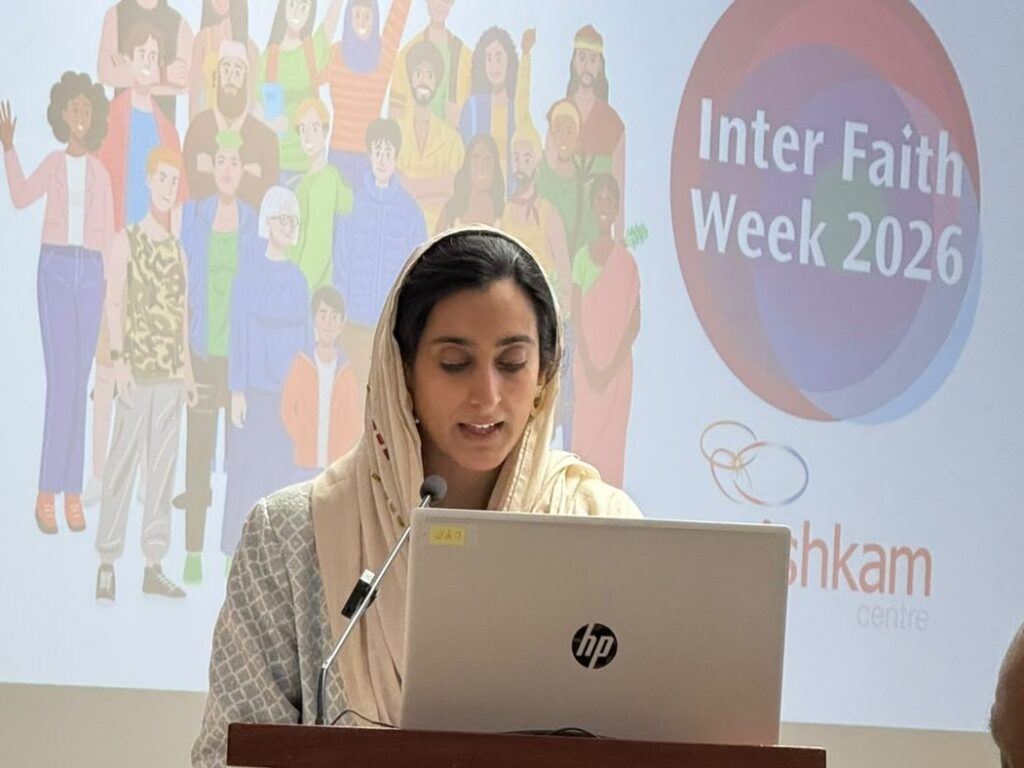
NASACRE Executive Member, Hifsa Haroon-Iqbal was delighted to be able to join faith leaders, educators and community representatives from across the country at the Nishkam Centre in Birmingham for the official launch of National Inter Faith Week 2026. Here are her reflections:
Under the theme “Lighting the Way for a Shared Future”, the event brought together people committed to strengthening relationships across faith and belief communities, celebrating our diversity and considering what more we must do to build a cohesive society. There were many inspirational speakers, each demonstrating in their own way the importance of sustained commitment to community, education, faith and civic responsibility.
Shared values and the next generation
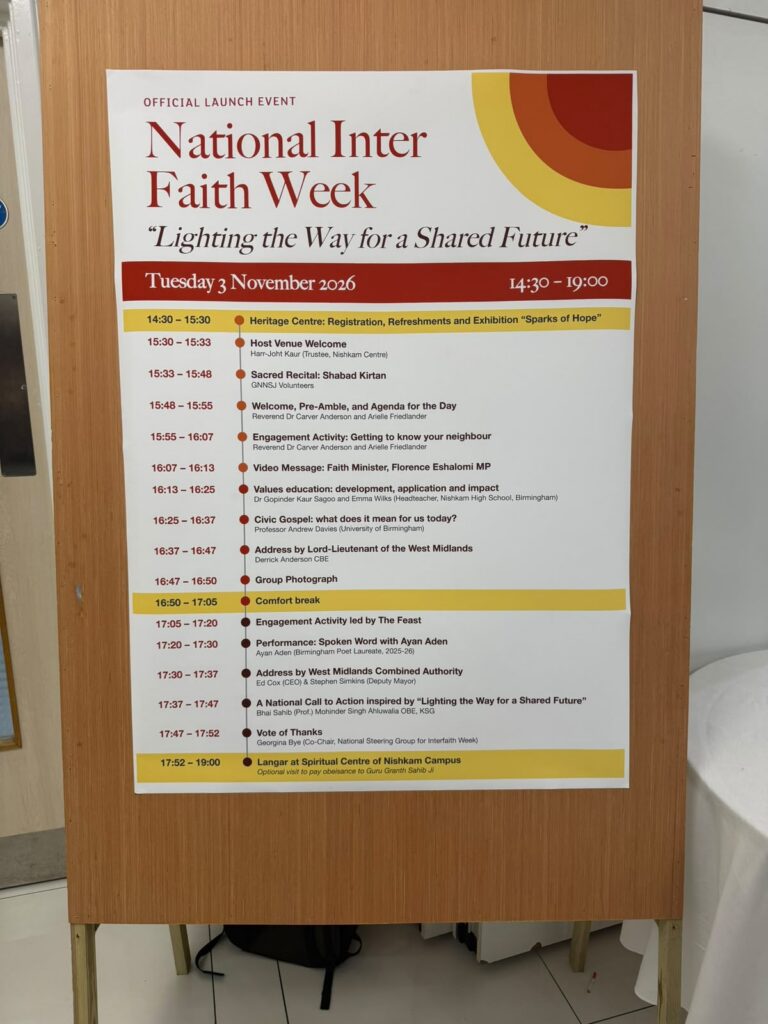
I was particularly interested in the presentation by Dr Gopinder Kaur Sagoo and Emma Wilks of Nishkam High School, who explored values education and its impact on young people. They highlighted Birmingham’s distinctive Agreed Syllabus for Religious Education, built around 24 shared values known as the “Dispositions”. Developed through dialogue between religious and non-religious communities, these include justice, mercy, forgiveness, compassion, inclusion, belonging, unity, courage and leadership. What makes this approach so important is that it takes Religious Education beyond simply learning about different religions and worldviews. It encourages young people to consider how values translate into how we treat others and contribute to society. For me, this is precisely where Religious Education and interfaith understanding meet. At a time when young people are increasingly exposed to misinformation, polarisation and prejudice, we must equip them with the knowledge, confidence and values to build respectful relationships across differences.
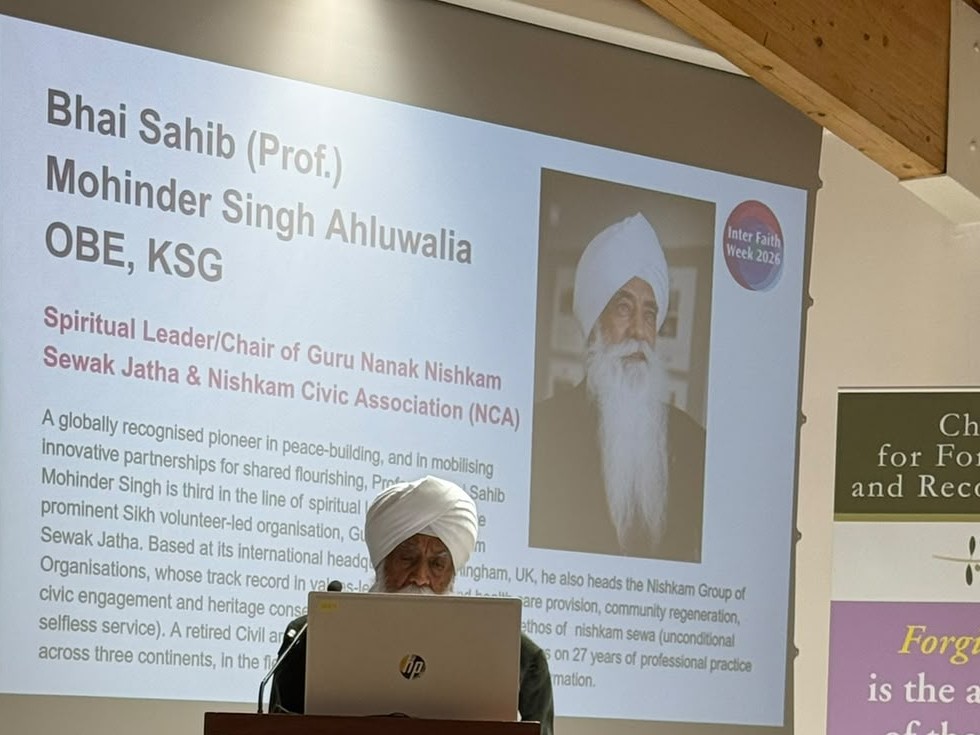
Professor Andrew Davies from the University of Birmingham also offered thought-provoking reflections on the meaning of civic gospel in contemporary society and the responsibilities we share in shaping our communities. Another particularly memorable contribution came from Bhai Sahib Professor Mohinder Singh Ahluwalia OBE KSG, whose passionate call to action was grounded in his own many years of dedicated service to society. His message was a powerful reminder that commitment to community cohesion, service and bringing people together must be demonstrated through what we do, not simply what we say. His contribution brought a sense of personal conviction to the day’s theme: we all have a responsibility to help create the shared future we want to see.
The Faith Minister’s challenge – but what about government?
A significant contribution also came through a video address from Florence Eshalomi MP, the Government’s Faith Minister. Her challenge to faith and belief communities was clear: be bold, build relationships and foster greater understanding. I wholeheartedly agree. Faith communities have an extraordinary capacity to bring people together, challenge misconceptions and provide trusted spaces for dialogue, particularly during times of tension and uncertainty. However, there is an equally important question for government: what is it doing to support this work?
Whilst support for Inter Faith Week and grassroots initiatives is welcome, interfaith organisations and networks need more than warm words. For decades, many have been quietly building relationships, challenging prejudice and responding to community tensions, often relying heavily on volunteers and limited resources. If government expects faith communities to lead, it must provide meaningful and sustained support. This means investment in local initiatives, stronger partnerships with civic institutions and recognition that interfaith engagement is not an optional extra. It is an essential part of building a healthy and cohesive society.
At a time when anti-Muslim hatred, antisemitism, racism and wider hostility towards religious communities remain serious concerns, we must also be prepared to have difficult conversations. Genuine relationships are not built by avoiding disagreement, but by challenging prejudice, confronting misinformation and learning to navigate differences respectfully. Being bold means standing alongside one another, even when doing so is uncomfortable or unpopular.
Turning shared values into action
For me, the real measure of National Inter Faith Week will not be the number of events held between 8 and 15 November, but what happens afterwards. Do we continue the conversations? Do we build relationships beyond our usual networks? Do we challenge prejudice and stand together when it matters? As a British Muslim who has spent many years working in interfaith relations, Religious Education, safeguarding and community cohesion, I know that understanding does not happen by accident. It requires commitment, curiosity and courage.
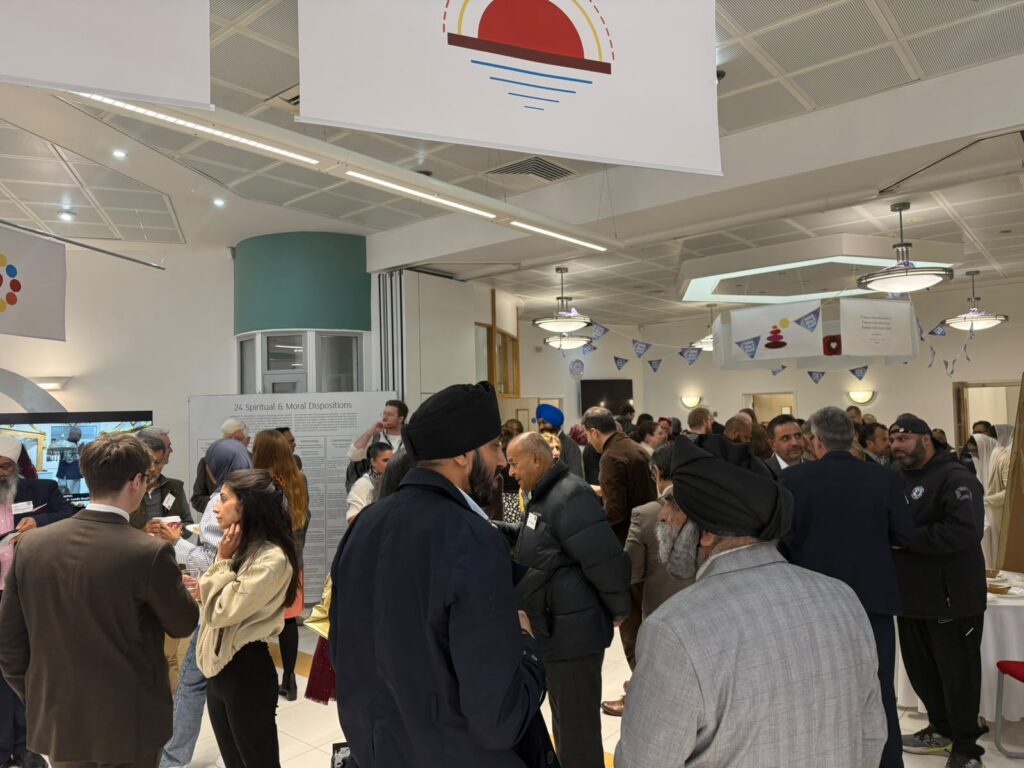
The 24 Dispositions underpinning Birmingham’s Religious Education syllabus offer an important reminder that values such as justice, compassion, forgiveness, courage and belonging are not simply ideas to be discussed in classrooms. They must be reflected in our everyday actions and relationships. The Faith Minister’s challenge to faith and belief communities is one we should embrace, but the responsibility must be shared by government, educators, civic institutions and wider society.
Lighting the way through service and hospitality
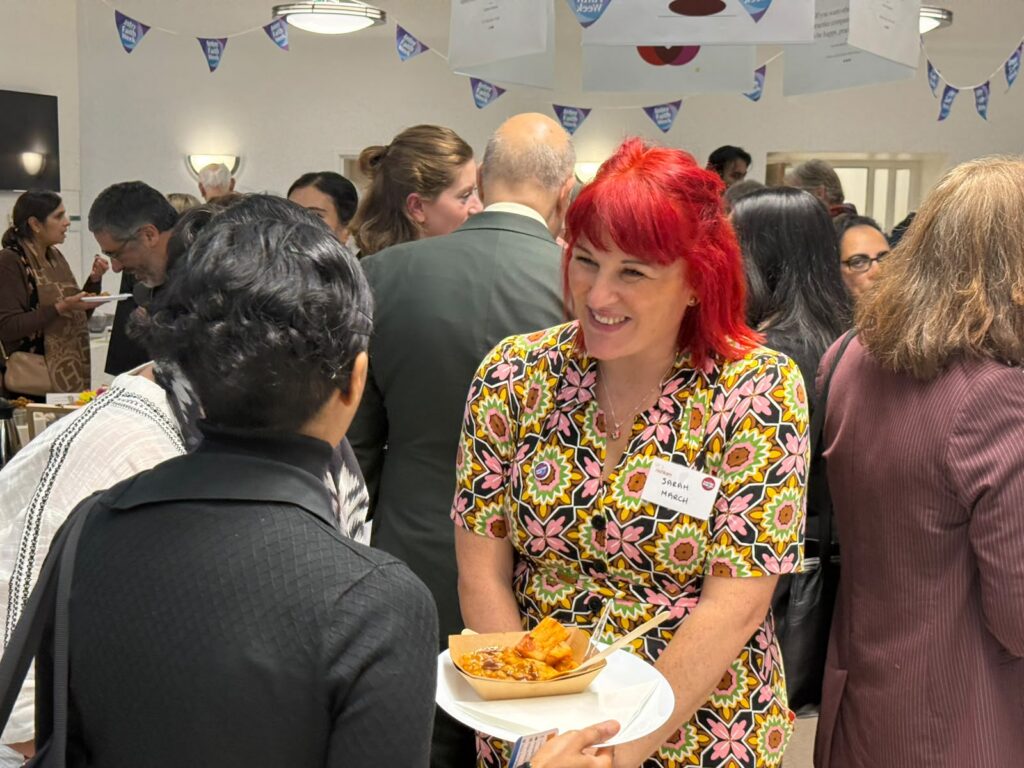
Finally, no reflection on the launch would be complete without acknowledging the extraordinary Sikh hospitality shown throughout the event by our hosts at the Nishkam Centre. From the warmth of the welcome to the generosity and spirit of the volunteers, the ethos of selfless service was evident throughout. The provision of langar was particularly special: a beautiful expression of equality, generosity and service, bringing people together around a shared meal regardless of faith or background. It was a fitting reflection of the very values we had spent the afternoon discussing.
Lighting the way for a shared future is not simply about talking about respect, compassion and unity. It is about living those values, opening our doors, serving others and creating spaces where everyone feels welcome.
And perhaps that was one of the most powerful messages of the day.
Hifsa Haroon-Iqbal OBE DL MPhil | Executive Board Member, NASACRE | Chair, Staffordshire SACRE | Founder & CEO RE-Engage HHI