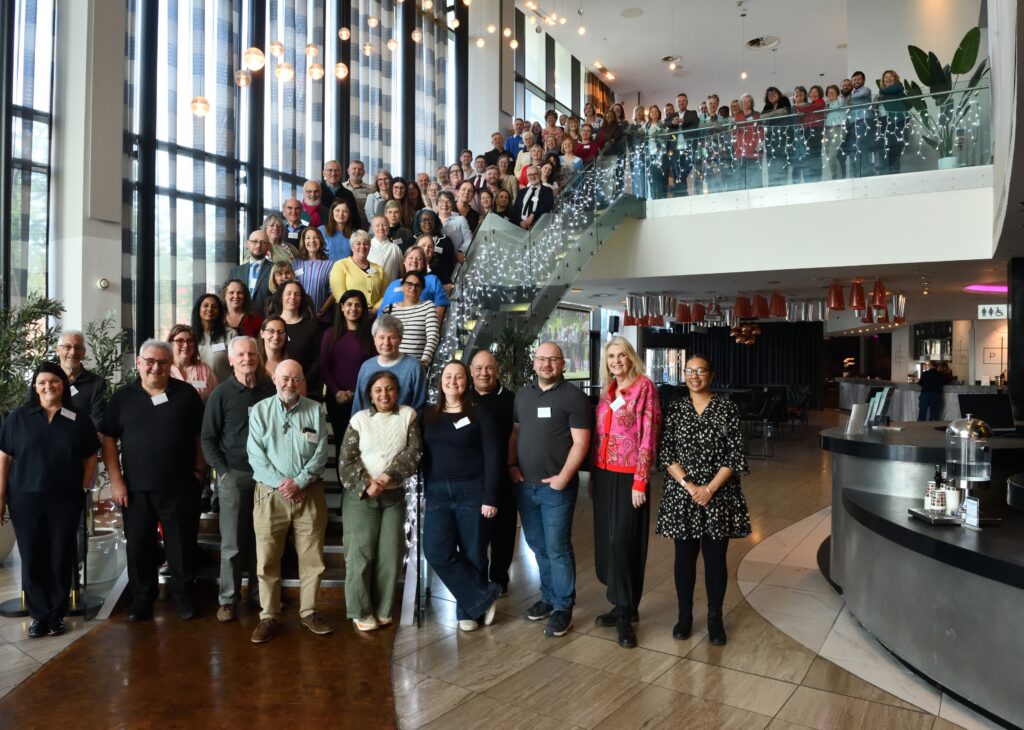
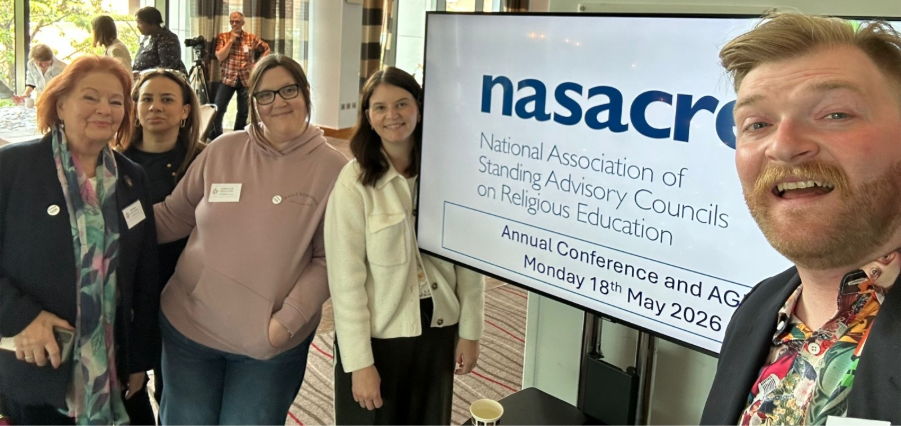
This year’s NASACRE Conference, held on 18th May 2026, brought together teachers, advisers, councillors and religion and belief community representatives from across England to explore a theme that feels more vital than ever: SACREs – Bringing communities together. From the opening welcome to the final reflections, the day highlighted the unique role SACREs play in strengthening relationships, supporting high‑quality RE and fostering social cohesion.
Rejoicing in Difference
The first keynote came from Professor Vanessa Ogden, whose 32‑year career began in the RE classroom and has most recently involved her leading the creation of the proposed programmes of Study for a National Curriculum RE and gaining consensus for them. She spoke candidly about the challenges facing schools today, particularly the “social fault lines… exposed by antisemitism and anti‑Muslim hostility”. For Prof. Ogden, schools have a nation‑building role that reflects the realities of their local communities as well as wider geopolitical pressures.
Her message was one of hope and responsibility. High‑quality RE, she argued, is essential for helping pupils understand diversity within and between religious and non‑religious traditions. She emphasised the transformative power of encounters: visitors from religion and belief communities, trips to places of worship and meaningful dialogue. These experiences, she noted, are what pupils remember years later.
Prof. Ogden reminded delegates of the three strands of RE: substantive, disciplinary and personal knowledge, and how each contributes to pupils’ confidence in identity and self‑expression. SACREs, she said, are “anchors for social harmony,” modelling how to live well together and supporting schools to do the same.
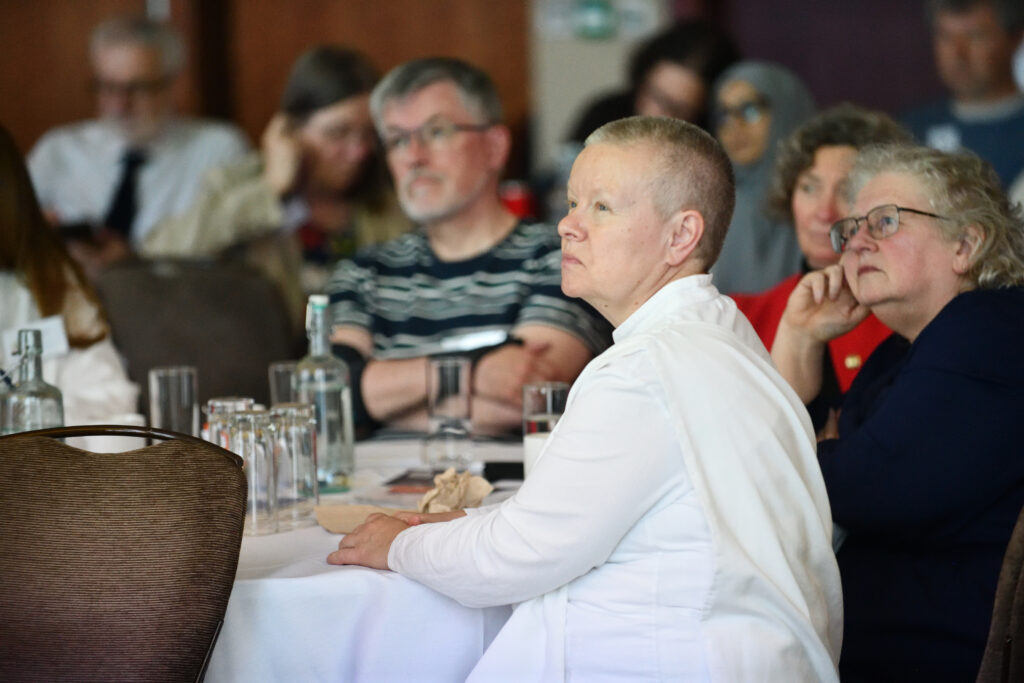
What a great day and to see so many SACREs represented was wonderful. – Ian, RE Adviser
The Future of RE: Policy and Possibility
Deborah Weston, Chair of the REC Policy Unit, provided a detailed update on the proposals for including RE in the National Curriculum. She acknowledged the pressures on the subject: falling GCSE entries, non‑compliance at KS4 and diminishing provision in some primary schools. Yet she also celebrated the sector’s unity in shaping a shared response.
Although no announcement has yet been made, Deborah explained the intention that RE be considered alongside all other subjects in the curriculum review. If accepted, it would require primary legislation—the first such change since 1988. Delegates were reassured that the proposals included SACREs continuing to play a vital role, particularly in supporting teachers with high‑quality resources and guidance.
Questions from delegates covered GCSE reform, collective worship and the timeline for potential changes. Deborah noted that the DfE is reviewing these areas simultaneously and that the proposed 2027 implementation date, while ambitious, is achievable.
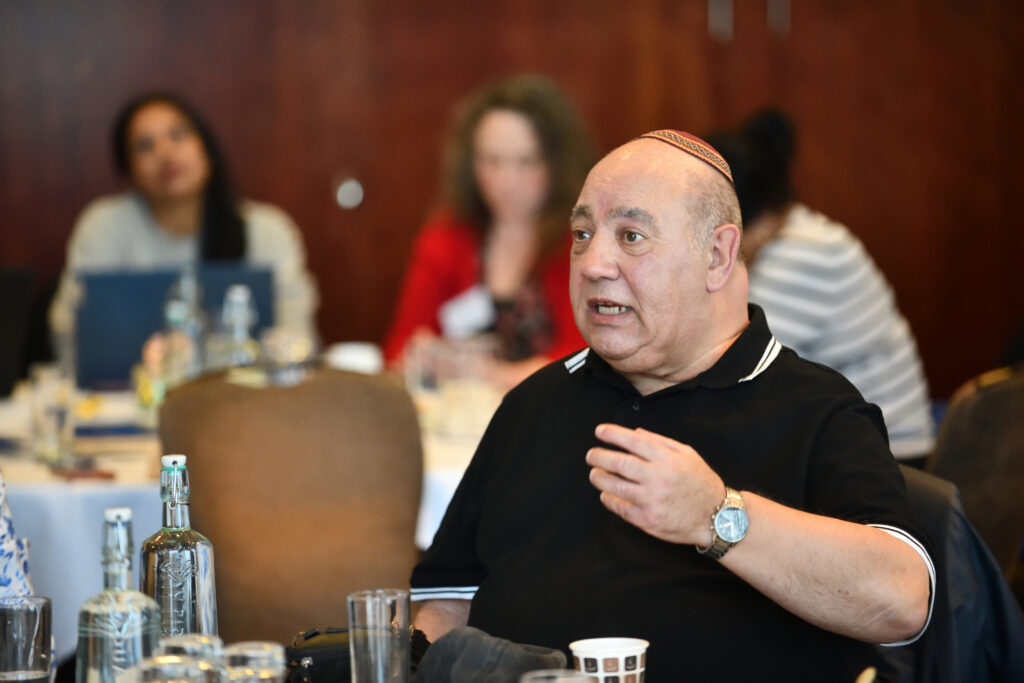
We all gained from attending: meeting new people, making friends, networking, and discussing different points of view, all with the view of improving RE in schools. – Alex, SACRE member
Connection Over Division
The afternoon keynote from Amy Ark of the Faith & Belief Forum brought the conference theme into sharp focus. Drawing on social contact theory, Amy explored how positive encounters reduce prejudice and build empathy. She described belonging as something increasingly “weaponised” in public discourse, making the classroom a crucial space for safety, respect and brave conversations.
Her practical framework—safe, brave and shared spaces—offered delegates concrete strategies for nurturing belonging. Storytelling, she emphasised, is central: “many stories matter, not just a single story”. The Forum’s interfaith workshops and parental engagement projects demonstrate how RE can strengthen relationships far beyond the classroom.
A great day at my first NASACRE conference with Oldham SACRE. So many new ideas, a great team and we even got Oldham on the screen when asked about the best things about SACRE. Great to see everyone and share ideas! – Lyndsey, RE teacher and SACRE member
A Shared Commitment
From policy updates to lived‑experience narratives, the conference affirmed a collective commitment: SACREs are uniquely placed to bring communities together. As the day closed, delegates left with renewed purpose—and a clear reminder that connection, not division, is the work that lies ahead.